On-page SEO for gambling sites is where most iGaming projects leave the biggest gap between what they have and what they could rank for. A casino affiliate with solid domain authority and a reasonable link profile sitting in position seven for a target keyword is not losing to position one because the gap in authority is insurmountable — it is losing because the pages ahead of it are better optimized at the content level. Better heading structure. Better intent alignment. Better keyword placement in the positions that carry the most weight. Better content depth that signals comprehensive topical coverage to search engines evaluating which result best serves the query.
We apply the block optimization methodology to gambling pages — the systematic approach to on-page structure that ensures every target keyword appears in the highest-signal positions, that content depth matches the competitive threshold for each query, and that every page communicates to search engines exactly what it covers and who it is for. The result is pages that extract maximum ranking value from every link and every authority signal the domain already has — without waiting for additional link building to move positions.
On-Page SEO for Casino Sites — What Actually Moves Rankings
On-page SEO for casino sites moves rankings when it addresses the specific factors that differentiate the pages in top positions from the pages below them for each target keyword. In most gambling niches, the pages in positions one through three are not there because they have the highest domain authority — they are there because their on-page optimization most precisely satisfies the search intent behind the query. A page that matches the query intent at every level — the H1, the opening paragraph, the subheading structure, the content depth, and the FAQ coverage — outranks a page with stronger link authority that fails to answer the query as comprehensively.
The on-page factors that consistently differentiate top-ranking gambling pages are heading structure matched to the keyword’s semantic field, content depth that covers the full topical scope of the query, keyword placement in the first one hundred characters of each content block, internal link structure that signals the page’s role in the site hierarchy, and behavioral signals that reflect genuine user satisfaction with the page. We optimize all five simultaneously rather than treating on-page SEO as a checklist of individual elements applied independently.
Search Intent Alignment for Gambling Keywords
Search intent alignment for gambling keywords is the single most important on-page factor for competitive iGaming queries. Google classifies the intent behind each gambling query — navigational, informational, or transactional — and ranks the content format that best serves that intent above content that is technically optimized but mismatched to what the user actually wants. A page optimized for “best online casino UK” as an informational guide ranks below a page structured as a comparison tool with filtering, ratings, and direct registration links — because the query intent is transactional, not informational. Getting the content format right for each intent type is the prerequisite for everything else in on-page optimization to work.
We classify intent for every target keyword before touching the page, using SERP analysis to determine which content format Google is currently rewarding for each query. The content brief for each page is built around the confirmed intent classification — which determines the page structure, depth, and conversion elements before any writing or optimization begins.
Block Optimization for Gambling Pages — The Method That Search Engines Reward
Block optimization for gambling pages is the methodology that produces the most consistent on-page ranking improvements across casino and betting content. The method is straightforward: every target keyword appears in a heading — H2 through H5 — and the same keyword is reinforced in the body text within the first one hundred characters of the block beneath that heading. This placement pattern ensures that search engine crawlers encounter the keyword in the two highest-signal positions on any page — the heading tag and the opening sentence of the content block — without requiring keyword density manipulation that degrades readability and increases bounce rate.
The block optimization structure also determines minimum content volume — each heading block requires at minimum seven hundred characters of substantive content that genuinely covers the topic indicated by the heading. Pages built to this standard rank for more keyword variations than pages with thin block content, because the depth of coverage signals topical authority that affects rankings for the entire semantic field around the primary keyword, not just the exact keyword phrase.
Heading Structure for Casino and Betting Pages
Heading structure for casino and betting pages maps the semantic territory of the target keyword cluster — each heading covers a distinct aspect of the topic that a user searching for the primary keyword might also want to know about. A page targeting “best online casino UK” with headings covering welcome bonuses, payment methods, game selection, licensing, mobile experience, and customer support covers the full evaluation framework users apply when selecting a casino — which is exactly the topical depth that search engines associate with authoritative comparison content for this query type.
The heading hierarchy also communicates the semantic relationship between topics — H2 headings establish the main dimensions of the topic, H3 headings elaborate on specific aspects within each dimension, and H4 headings address specific questions within each H3 subsection. This hierarchy produces the structured topical coverage that search engines use to classify pages as comprehensive authorities on their subject rather than shallow overviews that cover keywords without genuine depth.
Keyword Research and Placement for Gambling On-Page SEO
Keyword research and placement for gambling on-page SEO starts with mapping the full semantic field around the primary keyword — not just the exact phrase, but the related terms, question variations, and contextual keywords that appear in the top-ranking pages for the target query. Search engines evaluate topical completeness based on the semantic coverage of a page’s content, not just the presence of the primary keyword phrase. A casino review page that naturally incorporates terms like “wagering requirements,” “welcome bonus,” “payment processing time,” “mobile casino,” and “live dealer games” communicates broader topical authority than a page that only contains the primary keyword and a handful of direct synonyms.
We conduct semantic keyword research for each target page using Google autocomplete patterns, People Also Ask data, and related search analysis to identify the full term set that should appear naturally in well-optimized gambling content. The output is a keyword brief that specifies primary keywords for heading placement, secondary keywords for body content integration, and LSI terms that should appear in the semantic context of the page without forced insertion.
Primary Keyword Placement — Where It Matters Most
Primary keyword placement for gambling pages follows a clear hierarchy of signal strength: the H1 heading carries the highest keyword signal weight, followed by the URL slug, the meta title, the first paragraph within the first one hundred characters, and the H2 subheadings that structure the main content sections. Pages that place the primary keyword in all five positions — with natural language construction rather than keyword stuffing — consistently outperform pages that place keywords in body text without the heading and URL placements that carry highest weight.
We optimize primary keyword placement across all five high-signal positions for every target page, with natural language construction that passes readability standards while maintaining the placement pattern that maximizes signal strength. The URL slug is optimized at the architecture stage — changing URLs on established pages requires redirect management that adds technical overhead, which is why URL keyword optimization is part of the site architecture work rather than the content optimization work.
Long-Tail Keyword Integration for Gambling Pages
Long-tail keyword integration for gambling pages captures the secondary query traffic that adds up to substantial total organic volume when content is structured to cover the full question landscape around a topic. A casino review page that answers the questions users actually ask — “does this casino have PayPal?”, “what is the minimum deposit?”, “how long do withdrawals take?” — ranks for the long-tail queries those questions generate in addition to the primary review keyword. FAQ blocks at the end of gambling pages are the most effective structural element for long-tail keyword capture — the question-and-answer format naturally matches the query format that long-tail gambling searches take.
We build FAQ blocks for gambling pages using real questions sourced from Google’s People Also Ask data, autocomplete suggestions, and the specific questions that appear in search results for the target keyword. Each FAQ question is selected to capture a rankable long-tail query and add to the page’s topical authority rather than padding content with questions that users do not actually search.
Meta Tags Optimization for Gambling Sites
Meta tags optimization for gambling sites covers title tags and meta descriptions — the two elements that determine whether a page generates clicks from the search results it appears in. Ranking without clicking produces no traffic, which means meta tag optimization directly affects the revenue generated by organic rankings regardless of position. A page in position three with a compelling meta title and description generates more traffic than a page in position two with generic meta tags, because click-through rate differences between optimized and unoptimized meta tags can be larger than the traffic difference between adjacent positions.
We optimize meta titles and descriptions for gambling pages with the specific elements that drive click-through rate for iGaming queries: bonus amount specificity in casino page titles, event specificity in betting page titles, urgency and exclusivity signals in descriptions, and the E-E-A-T signals — review counts, expert designations, current year references — that increase the perceived authority and relevance of the result before the user clicks.
Meta Title Optimization for Casino Pages
Meta title optimization for casino pages places the primary keyword as close to the beginning of the title tag as possible — within the first three words where feasible — followed by the most compelling differentiator for the target query. For commercial casino queries where multiple results compete for the same keyword, the differentiator is what makes one result worth clicking over the others: “Top 10 UK Casinos” versus “Best UK Online Casino — £200 Bonus + 50 Free Spins” in the same SERP. The second title communicates specific value that the first does not, and in a competitive SERP where every result claims to be the best, specificity generates clicks.
Title tags for casino pages are kept within the fifty to sixty character range that displays without truncation in search results — longer titles that truncate lose the tail of the message, which often contains the differentiator that drives click decisions. We write meta titles with the character count constraint built into the brief rather than trimming optimized titles after the fact.
Meta Description Optimization for Betting Pages
Meta description optimization for betting pages uses the one hundred forty to one hundred sixty character display window to communicate the page’s primary value proposition in a way that generates clicks from gambling-intent searchers. Descriptions that repeat the page title in different words waste the additional click signal that the description provides. Descriptions that communicate specific, relevant information — the bookmakers covered, the specific market or event focus, the bonus or tool available — give users a reason to choose that result over others in the same SERP.
We treat meta descriptions as active click-through rate optimization elements rather than keyword placement opportunities — the description’s job is to generate clicks, not to add keyword signals that meta descriptions do not actually provide as ranking factors. A/B testing meta description variations through Google Search Console impressions and click-through rate data identifies the description approaches that generate the highest click yield for each page’s position in the SERP.
Internal Linking for Gambling Sites — Distributing Authority Where It Matters
Internal linking for gambling sites distributes page authority across the site hierarchy and signals to search engines which pages are most important for the site’s core keyword targets. A casino affiliate site with strong domain authority that distributes internal link equity across hundreds of pages equally gives no page enough concentrated authority to rank competitively for high-value keywords. Strategic internal linking concentrates authority on the pages with the highest commercial value — the main category pages, the top operator review pages, the primary bonus comparison pages — by directing more internal links from supporting content pages toward these priority targets.
We structure internal link strategies for gambling sites around the commercial value hierarchy — identifying the pages that generate the most affiliate revenue when they rank and ensuring the internal link architecture treats them as priority pages rather than equal nodes in a flat link graph.
Anchor Text Strategy for Internal Links on Gambling Sites
Anchor text strategy for internal links on gambling sites uses keyword-rich anchor text for links between topically related pages — passing both authority and contextual relevance signals through the link. An internal link from a blog post about casino bonuses to the main “best online casino UK” page with anchor text “best online casino UK” sends a clearer topical relevance signal than the same link with anchor text “click here” or “read more.” Across hundreds of internal links pointing to the same priority page with varied but keyword-relevant anchors, this cumulative signal contributes meaningfully to the target page’s ranking for the keywords those anchors reference.
Internal anchor text distribution for gambling sites requires the same management as external anchor text — over-concentration of exact-match internal anchors on a single page creates unnatural patterns that sophisticated on-page analysis tools identify. We distribute internal anchors across exact-match, partial-match, and topically relevant variations, with the distribution planned at the site architecture level rather than managed ad-hoc as content is published.
Silo Structure for Casino and Betting Affiliate Sites
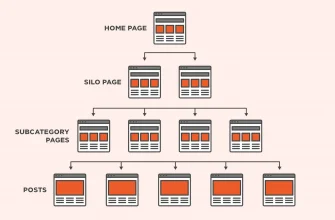
Silo structure for casino and betting affiliate sites organizes content into topic clusters that concentrate topical authority in each cluster around a pillar page, with supporting content pages linking back to the pillar. A casino affiliate site with a pillar page for “best online casino UK” supported by cluster pages covering casino bonuses, payment methods, game providers, licensing, and responsible gambling — all internally linked back to the pillar — builds stronger topical authority for the pillar’s target keywords than a flat site where pages exist independently without cluster relationships.
We design silo structures for gambling sites at the keyword architecture stage — before content production begins — so that every page produced enters the correct cluster relationship from its first publication. Retrofitting silo structure onto an existing flat site requires redirect management and internal link restructuring that is significantly more complex than building the structure correctly from the start.
Content Optimization for Casino and Betting Pages — Depth That Search Engines Trust
Content optimization for casino and betting pages addresses the depth dimension that separates pages search engines classify as authoritative from pages they classify as thin. Content depth in gambling is not measured in word count — it is measured in topical completeness: whether the page covers all the dimensions of the topic that a user with the target query intent would want to know about, and whether each dimension is covered with genuine substance rather than brief mentions that technically touch the topic without providing the information a user needs.
We optimize gambling page content depth using competitive benchmarking — analyzing the heading structure, section depth, and topic coverage of the pages currently ranking in top positions for each target keyword, and identifying the specific coverage gaps that, when filled, would make the target page more comprehensively useful than the current top-ranked results.
Content Updates for Gambling Pages — Freshness as a Ranking Signal
Content updates for gambling pages are one of the most underutilized on-page ranking levers in iGaming SEO. Search engines reward content freshness as a quality signal for queries where users expect current information — and virtually all commercial gambling queries fall into this category. A casino review that references a bonus offer from two years ago, a bookmaker review with outdated payment method information, or a betting guide that does not reflect current regulations signals content staleness that search engines use to demote pages in favor of more recently updated results.
We implement content update schedules for gambling sites that refresh high-value pages on a regular cadence — updating bonus information, payment method details, regulatory references, and operator-specific data that changes over time. The last-updated date on gambling pages is also an E-E-A-T signal that affects click-through rate in search results — users comparing two casino review pages in the SERP consistently favor the result that shows a recent update date over one without date information or with an old publication date.
Image Optimization for Gambling Sites — Alt Text and File Names
Image optimization for gambling sites covers alt text and file name optimization that contributes to on-page keyword signals and to image search visibility for gambling-related visual queries. Alt text for casino page images should describe the image content while incorporating the target keyword for the page or block — “best online casino UK welcome bonus screenshot” provides both descriptive value for accessibility and keyword signal for the page’s target query. File names follow the same principle — casino-welcome-bonus-uk.jpg carries more keyword signal than img_0047.jpg for the same image.
Image optimization is typically low-effort relative to its contribution to on-page completeness signals. We include image alt text and file name specifications in the content brief for every gambling page, ensuring that image optimization is applied consistently rather than left to the discretion of the content editor or developer uploading the images.
FAQ — On-Page SEO for Gambling Sites
How many keywords should a single gambling page target?
A single gambling page should target one primary keyword and a cluster of semantically related secondary keywords and LSI terms that naturally appear within comprehensive coverage of the primary topic. Attempting to target multiple unrelated primary keywords on a single page dilutes the topical focus that search engines use to classify page authority — a page that tries to rank for both “best online casino UK” and “sports betting tips UK” simultaneously fails to provide the topical depth for either query that a page focused on one topic provides. Secondary keywords within the same semantic cluster — variations of the primary term, related queries that appear in the same search sessions — are appropriate to include as they deepen topical coverage rather than diluting it.
How long should a casino affiliate page be?
Casino affiliate page length should be determined by the content depth required to comprehensively cover the topic — not by a word count target. The practical minimum for competitive commercial gambling pages is determined by the heading structure and block optimization standard: each heading block requires at minimum seven hundred characters of substantive content, and a page targeting a competitive keyword typically needs twelve to twenty heading blocks to cover the topic comprehensively. This produces pages of approximately eight thousand to fourteen thousand characters — roughly twelve hundred to two thousand words — which aligns with the content depth of pages currently ranking in top positions for competitive casino affiliate keywords. Pages that are shorter than this threshold typically lack the topical coverage that competitive rankings require.
Does on-page SEO alone move gambling rankings?
On-page SEO alone moves rankings when the domain already has sufficient authority to rank for the target keyword and the current on-page optimization is the limiting factor. For pages in positions four through fifteen for high-authority domains where link equity is not the constraint, on-page improvements — particularly heading restructuring, content depth expansion, and intent alignment corrections — produce measurable ranking movement within four to eight weeks of implementation. For new domains or pages targeting keywords beyond the current domain’s authority ceiling, on-page optimization is a necessary foundation but link building is required to move positions. The audit phase determines which constraint applies for each specific page before work begins.
What is the most important on-page factor for gambling sites?
Search intent alignment is the most important on-page factor for gambling sites — more important than keyword placement, content length, or any individual technical element. A page that is technically optimized but mismatched to the intent behind its target keyword will not rank competitively regardless of how well other on-page elements are executed. Getting the content format, depth, and structure right for the specific intent of each gambling query is the prerequisite that makes every other on-page optimization decision produce results. Once intent is correctly addressed, heading structure and block optimization — placing the primary keyword in headings and within the first one hundred characters of each block — are the highest-impact technical on-page elements for gambling content.